
Kodachrome 64
Copenhagen, June 1996

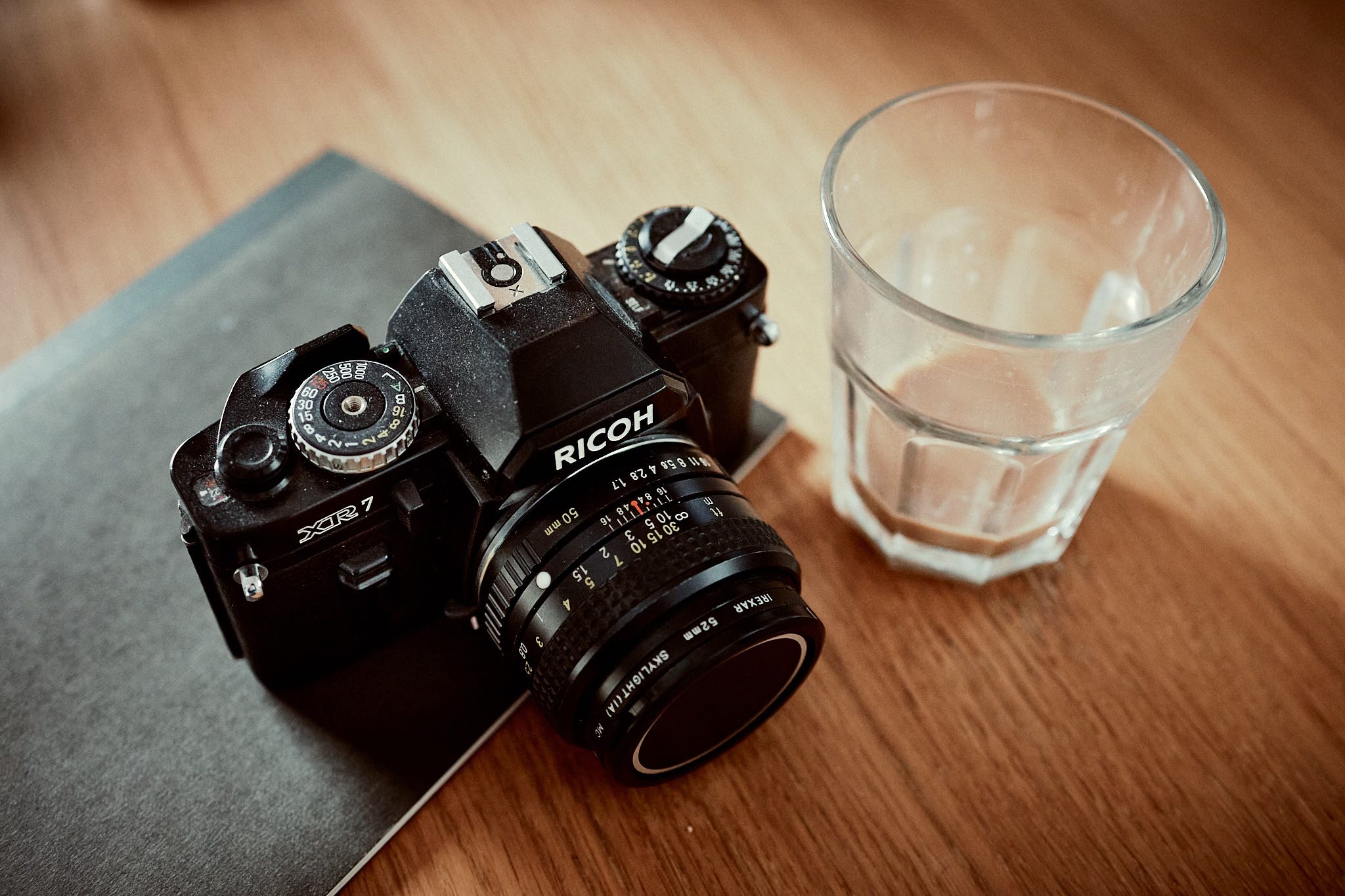
You live on the fifth floor in an apartment on Silkeborggade on the corner of Korsørgade, not far from Nordhavn. It’s a ten-minute subway ride from where you live to the part of the city where commerce and tourists converge.
Maybe because of the heat, maybe because you’re restless, you’ve been waking before six for over a week.
“It’s the hottest June on record,” the radio keeps saying, and they’re probably right because that’s how it feels, especially at night when there’s no air in your apartment and the bed clothes stick to your body.
Now term is over, you have more energy. The first part of the day feels like a possibility and not something to drag yourself through before work.
As you flick through the morning’s Politiken your eyes skim the headlines, your fingers turn the pages, not really concentrating. Thankfully term is over and you don’t have to teach any more language classes until the end of the summer. Life kicks off again at the end of August.
Right now you have nothing to think about except yourself and the here and now. France and family is planned for the first two weeks of August: France can wait.
Except it doesn’t wait, not really. France sits there in the back of your mind the way it always does, less a holiday and more an annual reckoning. Last August you’d taken the camera to Île de Ré and barely used it. You’d walked the harbour at Saint-Martin in the late afternoon when the light was doing something extraordinary to the salt flats and the moored boats, and you’d thought about raising the camera but hadn’t. You’d sat outside a café in La Flotte and watched an old man methodically repairing a fishing net, his hands dark and precise, and you’d known — known with absolute certainty — that it was a photograph. But you’d ordered another pastis instead and written about it later in the journal, the way you always do, turning the thing you saw into words because words are safe. Words don’t require you to walk up to a stranger and take something from them.
You’d written: The light on the salt flats at Ars-en-Ré. Pink and white. A woman cycling along the path by the oyster beds, her basket full of bread. I should have been there with the camera but I was sitting in the square writing this instead. I keep describing photographs I’ll never take.
That last line had bothered you for weeks afterwards. You’d read it again on the flight home and felt something tighten in your chest. Not shame exactly, but something adjacent to it. The recognition that you might be someone who talks about photography, reads about photography, owns the right camera, loads the right film — and never actually becomes a photographer. That you might spend your whole life in the café with the journal, narrating a life that hasn’t happened.
After you finish your coffee and toss Politiken onto the mounting pile of newspapers gathering next to the kitchen table, you shower and get dressed. You’ve decided to postpone today’s run. You’ll run late. As late as possible when the heat of the day has dwindled.
When you leave the apartment you’re accompanied by your Ricoh XR7, a 28mm lens, and two new rolls of Kodachrome 64.
Sometimes when the weather is as good as it is today you cycle into the city but today you take the S-tog from Nordhavn to Hovedbanegård — the Central Station.
Sure, it’s doable on a bike but it’s such a pain cycling with a camera slung across your body. Cycling with a bag is a pain and there’s no way you’re doing that today. The bag will just weigh you down and make you sweat even more.
No, today you take the S-tog.
On the subway you people-watch. Most of them are heading to work. The carriage is pretty full and you let your eyes skim around, recognising some of the faces. In particular there’s a young guy, dressed in a pale blue short-sleeve shirt. He looks like he works in an office. Not a store. The brown leather bag that he’s carrying signals “office worker”. It looks too expensive, too selectively chosen.
Still, something doesn’t sit right with you. There’s something about him that feels like a contradiction. He’s young, maybe mid-twenties like you, but his haircut and clothes make him feel old. Or rather, older than he looks. Like he’s settled for something dull already in life.
It’s brought all the more home because of the hot summer day.
You’ve seen him many times before but you never nod at each other in recognition. You both just share the space again, gently rocked by the sway of the carriage. And it occurs to you, not for the first time, that you and he are not so different. He has his leather bag and his office. You have your camera and your language classes. You’ve both settled into the shape of a life without quite deciding to. The difference is that he seems at peace with it, or at least unaware, and you are not. You carry a camera everywhere as proof of an intention you can’t act on.
You grip your camera tightly as it sits in your lap, bracing yourself for the sneaking fingers of a consummate thief. But maybe you’re just holding it there hidden from view as much as possible because you don’t want people to see the camera. Not really. You’re just not comfortable with it.
Not comfortable with what it says about you. A camera in your hands is a declaration: I am here to look. I have the right to look. And you’re not sure you believe that about yourself. You teach English to adults in evening classes. You are good at it. You are patient and clear and your students like you. That is who you are. The camera is who you might be, and the distance between those two things feels like it gets wider every time you load a new roll of film and narrower every time you leave the developed prints in the envelope from the lab, unopened on the kitchen table for days, afraid to look at what you’ve made.
You run your thumb in circles against the back of the camera body as you hold it, noticing how soft it’s getting, the material worn slightly thin, the metal body of the camera almost visible.
The plan today is to wander along Strøget and see what’s happening. It will be busy what with all the tourists mingling with the locals hell-bent on making the most of the good weather. No one will notice you with your camera. Besides, you’re wearing shorts, sandals, and a shirt and with a camera in your hand you look vaguely like a tourist. No one will notice if you take photographs in the busiest street in the city. You know this from experience having done this countless times before.
But the thing is, if you had half the nerve of Bruce Davidson you’d be taking photographs on the subway. You’d be working the carriage, trying to capture the blank stares of the commuters making their way to Central Station, shut away in their own private universe whether they have their head in a book, a newspaper, the earphones they’re wearing or talking to the person next to them. You’d photograph the unfolding misery of a young man too old before his time completely unaware that it’s happening to him right here, right now. Or the young woman opposite him, probably a student, reading de Beauvoir’s *La femme rompue*, the blondness of her hair only intensified by the morning sunshine cutting through the window, making it look almost white.
But you’re not Bruce. You’re not the kind of photographer who rides the subway looking to capture the grit and grime of the city, poking a camera into people’s faces and firing a portable flash to document the here and now, creating high-contrast, vibrant (and often harsh) portraits of passengers in the grimy, graffiti-ridden carriages.
Not that Copenhagen is grimy. It’s pristine in comparison to New York, London, and Paris. There’s no graffiti on the walls of the train and the seats are clean, the politely scuffed cloth upholstery the only real sign of wear and tear.
But Bruce Davidson got in close. He got the camera right into people’s faces. Sure, some of his shots look slightly posed, like the subject was aware they were being photographed, but the vast majority of his subway work feels like candid captures.
Then there’s the light and the colours. Bruce transitioned to colour photography for his Subway project. Sure, he made his name shooting black and white but you don’t really care so much for that. For you, it’s his colour work shot on Kodachrome 64 augmented by the pop from the flash. It’s intense, vibrant. Volatile.
There’s so much to learn from Bruce, you realised back in the spring, after finding a copy of Subway in the bookstore by Rådhuspladsen. It was expensive but you’d bought it anyway, knowing that you needed to try and dissect how he does what he does as soon as you started to flip through the pictures.
But even though you’ve pictured yourself doing it, figured out what he did, you’re not Bruce. You don’t scuttle down into the warrens of the New York subway with your Leica and a 28mm and a flash. You’re just a well-educated nobody getting by just fine teaching language classes in the afternoons and evenings, hiding away in a sublet apartment in one of the better areas of the city.
Sure, you hang out in Den franske café on the corner of Østerbrogade by Sortedams Sø with your camera on the table next to a cappuccino and your journal. It’s a journal where you scribble what you do and what you could do. What you could become if you had half the nerve.
The journal is one of many, full of pages and pages describing the photographs you didn’t take. Light you noticed and let pass. Faces that would have been something if you’d had the courage to raise the camera. It reads like a catalogue of near-misses written by someone who has confused watching with living.
Sometimes you flip back through older entries and it frightens you how little has changed. The same café. The same cappuccino. The same beautiful, useless observations recorded in the same scruffy handwriting, year after year, the only evidence that time is passing at all being the date at the top of each page.
You spend the day on Strøget and it’s fine. You shoot a roll and a half. Tourists, mostly. The long shadows on Amagertorv in the late afternoon. A child eating ice cream outside the Royal Copenhagen store, the white and blue of the porcelain in the window behind her. Safe photographs. Competent photographs. Bland photographs. The kind of thing you could show someone and they’d say, “Oh, that’s nice.”
Once again you’ve taken the kind of photographs that don’t even deserve a second glance, destined to stuffed in a drawer.
It’s early evening by the time you get back to Nordhavn. The platform is almost empty. The heat has thickened through the day and the air feels heavy and still, the kind of stillness that precedes a storm, though nothing is forecast.
And then you see them.
Two women, standing on the platform, waiting. One of them is wearing a yellow dress, the other something darker — red or burnt orange, it’s hard to tell with the light behind her. The woman in yellow is reading something, a book or a letter, her head tilted down, her hair catching the early evening sun. She’s standing near the edge of the platform with the tracks and the city behind her, and the other woman is half-turned away, looking down the line for the train.
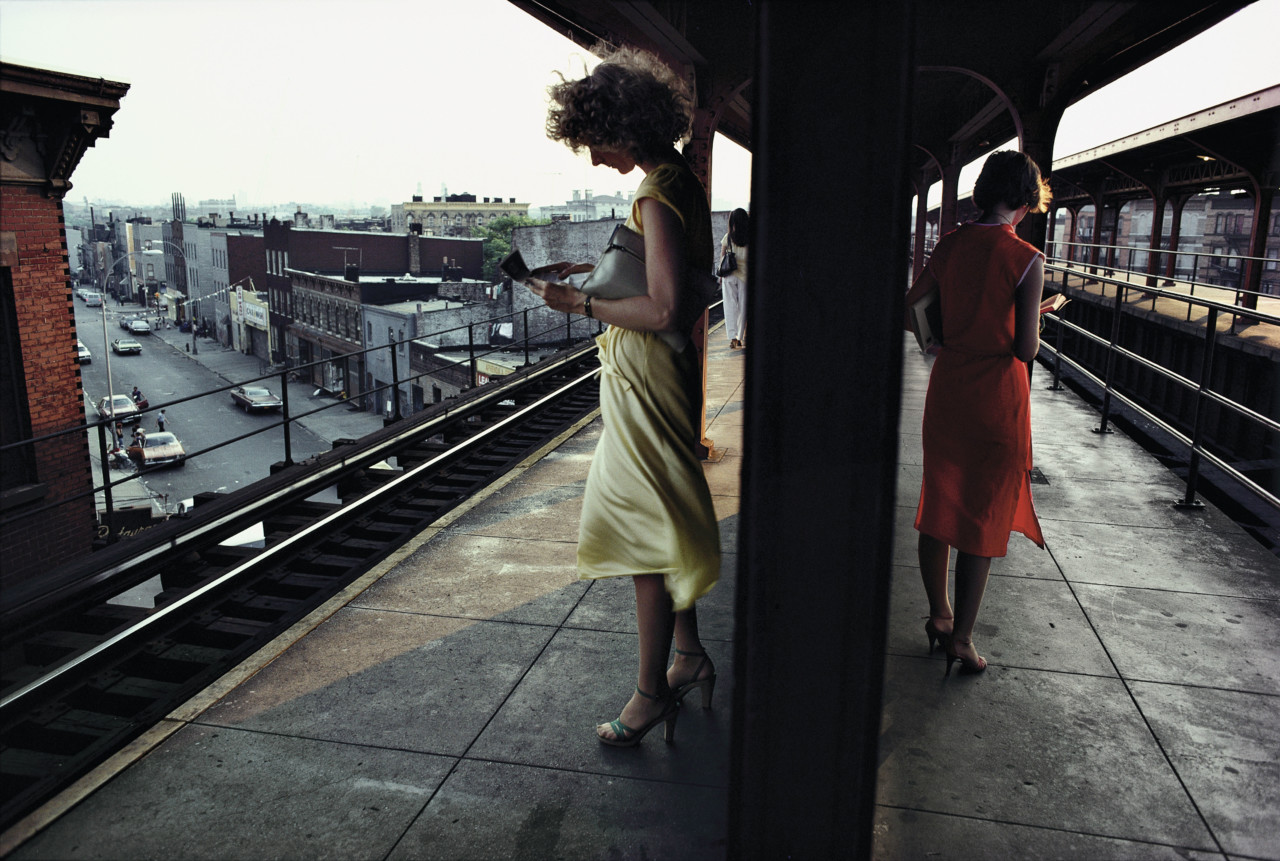
You know this photograph.
You know it because you’ve seen it before — or something so close to it that the recognition is immediate and physical, a jolt in your chest. It’s Bruce. It’s the elevated platform, the two women, the yellow dress luminous against the urban backdrop, the iron pillars of the station framing the shot.
It’s the photograph from Subway that you’ve looked at so many times the page has started to soften.
And before you can think about it — before the familiar hesitation arrives, before the internal negotiation about whether you have the right, whether it’s intrusive, whether the light is good enough, whether you’re good enough — you raise the Ricoh and shoot.
You take three frames. Maybe four. The motor drive advances the film and the sound of it is obscenely loud in the quiet of the platform but neither woman turns around. The one in yellow keeps reading. The other keeps watching for the train.
Your hands are shaking slightly when you lower the camera. Not from the weight of it but from something else. From the fact that you just did it. You just took the photograph without asking permission — not from them, but from yourself.
You didn’t write about it in the journal.
You didn’t sit in the café and describe the light.
You raised the camera and you pressed the shutter and now the image is on the film, a latent thing waiting in the dark of the canister, and no amount of hesitation can undo it.
The train comes. The women board a different carriage.
As you walk back to the apartment, you hold the camera in your hand, not letting it hang from the strap. You’re running your thumb over the worn patch on the back of the body, and you feel something that you can’t quite name. It’s not elation. It’s not pride. It’s more like the feeling of having finally said something you’ve been carrying around for a long time, something obvious that everyone else could see but you.
You don’t know it yet — you won’t know it for months — but one of those young women will become important to you. Not because of the photograph, or not only because of it, but because of what the photograph sets in motion, the way it proves to you that you’re capable of stepping forward into a moment instead of letting it pass and writing about it later in neat handwriting over a cold cappuccino.
But that’s later.
Right now you’re way home and you’re thinking about the two rolls of Kodachrome 64 and whether you’ll have the nerve to take them to the lab tomorrow or whether they’ll sit in the fridge with the others.
And who knows, maybe this summer — the summer of June 1996 — might be the summer when things change. Maybe there will be a thunderstorm late one night when you’re sitting at the window watching the city shuffle along underneath you, and that storm will break the heatwave the city has been having, and the next day you’ll leave for France and the countryside, and the light will be different there.
And maybe this time, you’ll be ready for it.
Oh man. It’s 4am here now and I am reading a masterpiece destined for every artist at heart and every artist who made it. A universal testimony for all of us. I can’t find the words. Afraid I’d spoil it, they’ll never suffice. But I have to say it nevertheless. It is beautiful beyond words. Thank you 🙏
Beautifully written. As someone who has never had the cojones for street photography, my chest tightened along with yours… – and I felt myself with you. The temptation to add that image must have been overwhelming; but the words are more than enough; and the expectation you build is superbly controlled. Thank you.